Blog
 18-Apr-2025
In the world of international shipping, there is often confusion about the roles of different logistics players. Two terms that are frequently used but sometimes misunderstood are NVOCC (Non-Vessel Operating Common Carrier) and freight forwarder. These two entities may seem similar, but they have distinct roles that can significantly impact the success of your shipments.
In this post, we’ll explore NVOCC vs Freight Forwarder, the key differences between them, and how each plays a role in the world of global logistics.
NVOCC: A Carrier Without the Ship
Let’s start with NVOCC. An NVOCC is a company that does not own ships but operates as a carrier in legal terms. It can issue its own bill of lading (BOL), negotiate directly with shipping lines, and accept responsibility for cargo. NVOCCs are especially common in full-container-load (FCL) shipping, where shippers need a large amount of space for their goods.
Essentially, an NVOCC is the one you turn to if you need a reliable carrier that will take full responsibility for the transport of your cargo. Since they don’t own ships, NVOCCs often contract with shipping lines to reserve space and manage containers on behalf of their customers.
Freight Forwarder: The Logistics Mastermind
On the other hand, a freight forwarder is more like a logistics coordinator than a carrier. They don’t operate as carriers themselves (unless licensed as an NVOCC), but they arrange for the movement of goods from one place to another. A freight forwarder’s job includes organizing the shipment, handling customs, arranging for warehousing, and managing multiple transportation modes such as land, air, and sea.
Freight forwarders are best suited for businesses that need comprehensive, end-to-end logistical solutions. They ensure that your goods get from point A to point B safely and efficiently, while also managing the paperwork, insurance, and any other aspects of logistics that can be time-consuming or complicated.
NVOCC vs Freight Forwarder: Key Differences at a Glance
Here’s a side-by-side comparison of NVOCC vs Freight Forwarder to make things clearer:
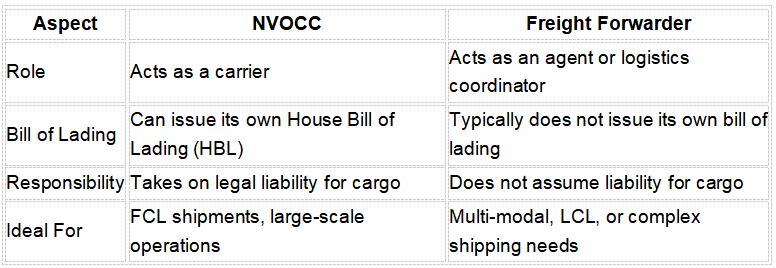
How to Choose Between NVOCC and Freight Forwarder?
The choice between an NVOCC vs Freight Forwarder ultimately depends on your shipment needs. If you are moving a large amount of goods that requires the use of full containers, and you want a company that can take full responsibility for your cargo, an NVOCC may be the right choice. However, if you are dealing with complex shipments that involve multiple modes of transportation, or you need more personalized guidance throughout the logistics process, a freight forwarder would be a better fit.
Conclusion
To sum up, the differences between NVOCC vs Freight Forwarder can significantly impact your international shipping strategy. NVOCCs offer control over the shipping process and take legal responsibility for your cargo, while freight forwarders provide a more holistic, multi-modal approach to organizing shipments. Understanding these differences will help you make better decisions based on the specific needs of your business and cargo.
By knowing when to engage an NVOCC and when to contact a freight forwarder, you can streamline your logistics operations and avoid common pitfalls. Whether you’re new to international shipping or a seasoned professional, it’s essential to understand these roles to optimize your shipping experience.
Related blogs
 785
785