Container Shipping Cycle Turns: HMM Pauses Container Ship Expansion and Shifts Investment Toward Energy Shipping
Logistics News
4-Aug-2026
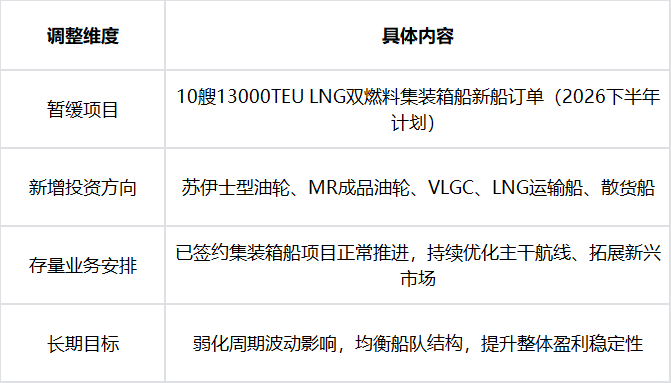
A major strategic change is emerging in the global container shipping market. HMM, the world’s eighth-largest liner operator and South Korea’s largest container carrier, has announced an adjustment to its fleet plan. The company has postponed a proposed order for ten 13,000-TEU LNG dual-fuel container ships planned for the second half of 2026 and will direct more capital toward energy shipping segments, including tankers and LNG carriers. The adjustment does not represent a withdrawal from container shipping. Instead, HMM is diversifying its fleet to offset market-cycle risks, sending an important signal for container shipping capacity and route pricing among freight forwarders.
• Strategic Adjustment: HMM pauses new orders for large container ships and moves away from capacity expansion focused primarily on scale
• Shift in Investment: Capital is being directed toward tankers, VLGCs, LNG carriers, and other energy shipping segments
• Reasons for the Adjustment: Container shipping overcapacity, geopolitical costs, and uncertainty over trade policies are putting pressure on the market
• Industry Trend: Major carriers are shifting from capacity expansion toward more cautious operations and greater attention to investment returns

Introduction: Global container shipping overcapacity, combined with external uncertainty, is the main reason behind HMM’s decision to pause its expansion plan, signalling the end of capacity expansion focused primarily on scale.
As South Korea’s only global top-ten liner operator, HMM controls close to one million TEUs of capacity and is a major carrier on Asia-Europe and trans-Pacific mainline routes. Its decision to postpone further expansion reflects a cautious response to the current market cycle. Based on its first-quarter financial results, HMM has identified several factors weighing on continued large-scale expansion: concentrated newbuilding deliveries are creating excess capacity, tensions in the Middle East are raising shipping costs, and changes in international trade policies are increasing uncertainty. Together, these factors are putting pressure on container shipping margins.
Although diversions around the Red Sea have temporarily absorbed some capacity, continued newbuilding deliveries are keeping the supply-demand balance soft. Further expansion could intensify downward competition on freight rates and reduce margins. HMM has therefore chosen to slow its expansion to limit exposure to a market downturn. Freight forwarders may use the Inquiry Board to connect with suitable freight forwarding resources and prepare for changes in the capacity structure.
Introduction: By investing in shipping segments whose cycles do not always move in parallel, HMM is diversifying its fleet to offset fluctuations in container shipping.
While taking a more cautious approach to container shipping, HMM has continued to increase its investment in energy shipping. The company has already placed orders for eight bulk carriers and two liquefied gas carriers and is also advancing VLCC, VLGC, and LNG carrier projects. It plans to expand its VLCC fleet to 20 vessels and is working with partners to introduce additional VLGC capacity.
The market cycles of energy shipping and container shipping do not always move in parallel, allowing a diversified fleet to reduce exposure to a single shipping segment. As the exceptional returns in container shipping fade and competition intensifies, greater investment in energy shipping can improve HMM’s asset structure and strengthen its ability to withstand market fluctuations while maintaining more stable earnings.
Introduction: HMM’s strategic adjustment reflects a wider industry change, as global liner operators move away from expansion focused primarily on scale and place greater emphasis on investment returns, asset stability, and manageable risk.
During the pandemic, major carriers used strong market returns to expand their fleets and increase market share. As large numbers of new ships entered service and the period of exceptionally high freight rates ended, the limitations of this expansion model became increasingly apparent. Leading shipping companies are now changing their operating priorities. Rather than competing solely on fleet size, they are placing greater emphasis on investment returns, asset stability, and risk control.
The adjustment does not mean that HMM has stopped expanding its fleet. Under its 2030 strategy, the company plans to increase its fleet from the current 157 vessels to 276, an overall rise of 76%. The main change lies in the structure of that expansion. HMM is moving away from adding very large container ships simply to increase liner capacity. It will instead make more targeted investments in small and medium-sized container ships while expanding its bulk and energy transport fleet, creating a more diversified fleet structure.
Existing container ship orders will continue as planned, while HMM will continue optimizing its mainline services and expanding into emerging markets. Only the more aggressive addition of large container ships has been postponed. This is a structural adjustment to the company’s fleet strategy rather than a contraction of its container shipping business.

Operational Self-Check List for Freight Forwarders
• Are you monitoring changes in fleet expansion plans among major carriers and assessing their potential impact on future mainline freight rates?
• Have you diversified your carrier partnerships to reduce exposure to cyclical fluctuations involving a single source of capacity or a single route?
• Are you following changes in carriers’ asset strategies and identifying stable space and competitive freight rate resources in advance?
• Are you adapting your quotation and customer fulfillment plans to the industry’s shift toward more detailed and returns-focused operations?
Action Summary: HMM’s strategic adjustment signals that global container shipping is moving away from aggressive capacity expansion, with capacity growth slowing and freight rate competition becoming more measured. Freight forwarders should closely monitor capacity and capital allocation decisions by major carriers, adjust route quotations and shipment plans flexibly, and diversify their resources to reduce exposure to shipping market cycles.
Sources: HMM’s official financial reports, authoritative shipping and maritime institutions, and publicly available information from major industry media
Disclaimer: All information is sourced from publicly available channels and is provided for industry reference only. It does not constitute commercial or logistics operational guidance.

Last
Dardanelles Traffic Suspended After Bulk Carrier Grounds, Raising Schedule Risks for Freight Forwarders on Black Sea Routes
A key shipping passage serving the Black Sea was temporarily disrupted. On July 29 local time, a San Marino-flagged bulk carrier s

Next
Shipping Risks Spill Over: Drone Attack at Egypt's Damietta Port Causes Fires on Two LNG Vessels, Raising Risk Concerns on Mediterranean Routes
Shipping risks linked to the Middle East continue to spread. On July 29, fires broke out on two LNG vessels at Damietta Port, a ke