Maersk recently held the naming ceremony for its dual-fuel methanol vessel
Logistics News
 28-Mar-2025
Maersk recently held the naming ceremony for its dual-fuel methanol vessel, Adrian Mærsk, at APM Terminals Maasvlakte II in Rotterdam.
Stephanie Pullings Hart, Executive Vice President and Chief Operating Officer (COO) of Nestlé, was named the ship’s godmother. As a key Maersk customer, Nestlé ships 100% of its ocean cargo via the ECO Delivery Ocean program, which uses alternative fuels to cut greenhouse gas (GHG) emissions. Compared to traditional marine fuels, these alternatives reduce GHG emissions from Nestlé’s shipments by over 80%, reflecting the company’s financial commitment to the program since 2023.
Karsten Kildahl, Chief Commercial Officer (CCO) of Maersk:
"Dual-fuel vessels prove that decarbonization technology for shipping is already available. The crucial next step depends on the International Maritime Organization (IMO) member states’ decisions in London next month. We need strong regulations to scale up low-emission fuels. Ambitious partners like Nestlé are also essential—without them, we cannot achieve the green transition in shipping and logistics."
Stephanie Pullings Hart, EVP & COO of Nestlé and Godmother of the Vessel:
"At Nestlé, we see climate change as a defining challenge. As a global leader in food and beverages, we are taking bold steps to address it. By 2024, we will have cut GHG emissions by 20%, exceeding our 2025 target, and we aim for net zero by 2050. Our green logistics efforts, including this partnership with Maersk, demonstrate our commitment to a sustainable future."
With a capacity of over 16,000 TEUs, the Adrian Mærsk will join the Asia-Mediterranean trade route after its maiden voyage from Rotterdam.
As part of Maersk’s new East-West network, the vessel is expected to achieve over 90% schedule reliability once fully operational. Key hubs like APM Terminals Maasvlakte II play a vital role in ensuring this performance.
Dual-fuel ships are central to Maersk’s decarbonization strategy. Bio-methanol and e-methanol can reduce GHG emissions by 65-90% versus conventional fuels, depending on production methods. Maersk is also introducing dual-fuel LNG vessels, with plans to transition to green methanol as soon as possible. Given global demand, multiple low-emission fuel solutions will be needed to fully decarbonize shipping.
Last
近日,中国物流信息中心发布的《2025年全国物流预警预测报告》显示,基于全国1000余家物流企业的深度调研,行业正呈现结构性复苏与转型加速的双重特征。核心发现如下:一、市场信心显著修复,细分领域分化明显调查企业中对2025年经营持乐观预期的比例较去年四季度提升
Next
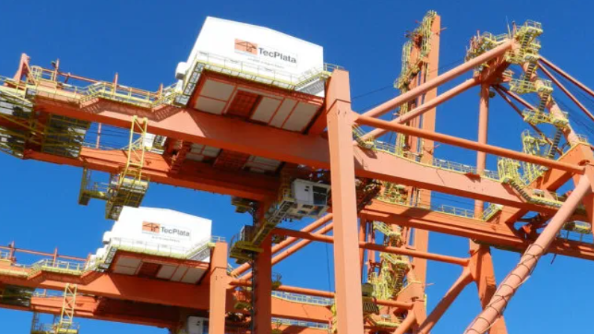
ONE Launches New Asia-South America Routes, Elevates TecPlata Port's Global Role
Ocean Network Express (ONE) recently announced the launch of two new shipping routes and the inclusion of Argentina’s TecPlata Por
