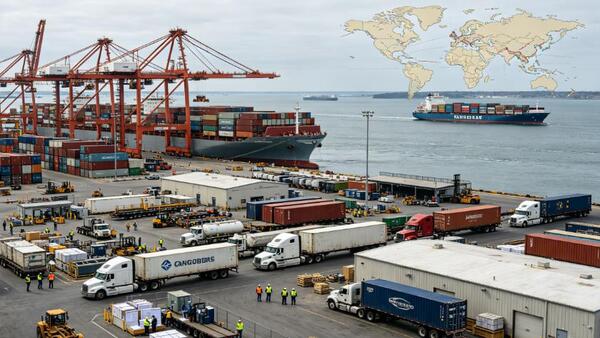
Customs document preparation checklist for streamlined retail container clearance when shipping from ningbo to germany via fcl

Freight Area

3-Jun-2026

Ningbo to Germany FCL shipping serves as a prevalent containerized shipping solution for high-volume retail commodity exports, where complete and compliant customs documentation acts as a core determinant of clearance efficiency and port detention control. For global freight forwarders catering to cross-border retail clients, standardized documentary workflows support stable and sustainable lane operations. According to WTO 2024 Global Trade Outlook data, documentary inconsistencies and missing filings contribute to a notable share of container clearance delays across Sino-European retail cargo transport.


Why does document standardization matter for retail FCL clearance to Germany?


Document standardization unifies compliance criteria between Chinese export customs and German import authorities for Ningbo to Germany FCL retail shipments. It reduces regulatory mismatches and lowers the frequency of manual customs inspections for full-container-load consignments.


Retail cargo consists of diverse SKUs, compact packaging units, and cyclic batch shipments, which raise stringent requirements for documentary accuracy and data consistency. Unlike industrial goods with unified specifications, retail commodities involve refined tariff classification procedures, making standardized paperwork essential for smooth customs release.


According to UNCTAD 2025 maritime logistics research, incomplete or mismatched customs documentation stands as one of the common triggers for container demurrage and detention charges on Asia-Europe FCL trade lanes. Retail shipments face elevated financial risks from such delays due to time-sensitive overseas shelf stocking schedules.


Forwarders should note that German customs authorities adopt rigorous cross-verification protocols for imported retail goods. Minor data discrepancies across filing documents may trigger targeted customs audits, extending container dwell duration at German destination terminals.


What core customs documents are mandatory for Ningbo to Germany FCL retail shipments?


A complete set of standardized customs documents establishes compliant filing foundations for retail cargo FCL clearance from Ningbo to Germany. Each document corresponds to specific supervisory rules and requires consistent cargo parameter alignment.


Commercial Invoice: This official document records actual transaction values, product specifications, unit pricing, and total shipment amounts for retail consignments. It supports German customs in cargo value verification and duty and VAT calculation. Forwarders must maintain full data consistency between commercial invoices, packing lists, and ocean bills of lading to avoid logical conflicts.


Detailed Packing List: This file itemizes retail SKU volumes, packaging dimensions, gross and net weights, and container stowage arrangements. A common mistake is adopting vague, generalized cargo descriptions for mixed retail FCL shipments, which may arouse customs classification inquiries and trigger physical inspections.


Full Set of Ocean Bill of Lading: Serving as the official cargo title document for Ningbo to Germany FCL shipments, the bill of lading records verified shipper, consignee, container, and voyage details. The recommended approach is to conduct full B/L data validation one business day prior to customs declaration to rectify typographical errors and data deviations promptly.


China Customs Export Declaration Form: This domestic filing document verifies the legality of export procedures and records official supervisory data. It requires identical commodity coding and descriptive wording adopted in German import declaration filings to maintain cross-border compliance consistency.


Commodity Compliance Certificates: Most retail goods imported into the EU market require valid compliance credentials, including CE conformity certificates and RoHS compliance test reports. These documents assist German customs in verifying product adherence to EU market access and safety standards.


What common document errors cause FCL clearance delays for retail cargo?


Preventable documentary errors represent major controllable factors slowing down retail FCL clearance processes on the Ningbo to Germany lane. Identifying and mitigating these issues helps forwarders elevate overall cargo circulation efficiency.


Cross-document data inconsistency ranks among the most frequent clearance obstacles. Many shippers adjust cargo quantities or packaging configurations before vessel departure but fail to update all supporting documents synchronously. Mismatched parameters between invoices, packing lists, and declaration forms often activate German customs risk screening mechanisms.


Inaccurate HS code classification creates additional clearance barriers. EU tariff regulations adopt refined classification standards for segmented retail product categories. Improper coding may lead to miscalculated duty rates and formal customs classification consultations.


According to ITC Trade Map 2024 statistical records, around 28% of Sino-German retail cargo clearance disputes relate to inaccurate commodity coding and asynchronous documentary data. These irregularities generate extra time expenditure and operational risks for forwarding firms and cargo owners.


Forwarders should note that German customs reserves the right to conduct secondary classification reviews and impose administrative penalties for falsified or inconsistent declaration documents. Repeated non-compliant filing practices may negatively impact corporate customs credit rankings.


How to optimize document preparation for faster FCL retail clearance?


Structured documentary optimization workflows help reduce filing error rates and compress clearance lead times for Ningbo to Germany FCL retail shipments. Standardized operational protocols support forwarders in building stable vertical logistics service capabilities.


Unify cargo parameter standards in advance: The recommended approach is to compile a unified cargo parameter template before formal document generation. All declaration filings, shipping documents, and compliance certificates should follow consistent product naming, specification, and quantity standards to eliminate cross-file discrepancies.


Implement dual HS code verification procedures: Forwarders can cross-reference Chinese and EU tariff coding databases to ensure HS code compliance with German import supervisory rules. For mixed retail FCL cargo, itemized SKU classification is advised to replace generalized product descriptions.


Complete full document pre-review in advance: Assign dedicated operational staff to conduct comprehensive document auditing three days before declaration submission, covering value authenticity, data consistency, and certificate validity. A common mistake is last-minute document compilation without pre-verification, which leads to urgent revisions and shipment delays.


Organize compliance documents per local review habits: Sort certification files and test reports in line with German customs reviewing conventions. Systematic document categorization improves manual inspection efficiency and shortens container on-site checking duration.


What operational benefits does standardized documentation bring to FCL retail logistics?


Standardized customs document management delivers multi-dimensional operational improvements for Ningbo to Germany FCL retail logistics operations. It mitigates hidden logistics expenditures and strengthens cross-border retail supply chain stability.


Streamlined clearance workflows shorten overall cargo transit cycles. Timely customs clearance enables retail goods to enter German warehousing and distribution networks faster, supporting retailers in optimizing sales scheduling and inventory turnover management.


According to Drewry 2025 lane cost benchmark analysis, standardized documentary management practices reduce average container detention duration for China-Europe FCL retail cargo by 18 to 24 hours, lowering additional port storage and demurrage expenditures.


For professional freight forwarders, mature standardized filing protocols enhance service professionalism and operational stability. Consistent clearance outcomes reduce client rework demands and support positive market reputation accumulation in cross-border retail logistics segments.


Forwarders should note that refined documentary management capability serves as one of the key evaluation metrics for retail cargo owners selecting long-term logistics partners. Reliable customs filing services effectively improve client retention and market competitiveness.


In evolving cross-border retail trade landscapes, standardized customs document preparation remains an essential foundational procedure for low-risk, high-efficiency Ningbo to Germany FCL retail cargo transportation. Forwarders with systematic documentary operation frameworks can effectively mitigate clearance risks and deliver stable logistics solutions for global retail supply chain networks.

Last

Comprehensive cost analysis breakdown for moving project cargo from guangzhou to dubai cross border logistics hubs

Guangzhou to Dubai logistics for project cargo features multi-layered cross-border cost structures that shift with transport modes

Next

Finding cost effective intermodal paths for commercial China factory freight to USA ocean lines

Optimizing intermodal transportation routes is critical for cutting logistics expenses while maintaining stable delivery schedules