Explaining heavy port salvage bond fees using a general marine average disaster GA insurance contribution historical case study
Freight Experience
 26-Jun-2026
This in-depth General Average (GA) Contribution Case Study explores high-value port salvage bond charges and supporting insurance allocation mechanisms that commonly puzzle global forwarding teams during maritime disaster settlement workflows. In recent years, rising port operational expenditures and sophisticated offshore salvage protocols have increased financial uncertainties for cargo shippers and third-party logistics providers. According to UNCTAD 2025 maritime industry reports, port salvage services and emergency bond guarantees constitute a growing share of non-recurring operational costs across major international hub port networks.
What are port salvage bond fees within General Average scenarios?
Port salvage bond fees refer to statutory financial guarantees imposed by terminal authorities to secure the settlement of shared emergency salvage expenditures triggered by valid General Average maritime incidents.
These mandatory security instruments differ from conventional cargo clearance duties and standard marine insurance premiums, as they exclusively cover extraordinary offshore rescue operations and port emergency response costs.
Port management departments and professional salvage institutions require formal bond deposits to ensure all cargo stakeholders who obtain risk protection from emergency operations fulfill corresponding GA contribution liabilities prior to cargo release.
Forwarders should note that unsettled salvage bond obligations may result in prolonged cargo detention and accumulated terminal storage penalties at international mainstream ports.
Why do disaster-level maritime incidents trigger high salvage bond costs?
Large-scale maritime disaster events require comprehensive salvage resource deployment and round-the-clock port emergency support, generating substantial non-recurring expenditures eligible for multi-party GA proportional allocation.
Typical disaster-level scenarios including vessel grounding, hull structural failure and open-sea stranding under extreme weather conditions require professional salvage crews, large-scale rescue vessels and continuous terminal emergency coordination services.
A common mistake is that many forwarding practitioners categorize GA-related salvage bond fees as routine port handling charges, leading to inaccurate client cost interpretation and improper insurance claim submission arrangements.
According to IUMI 2024 maritime risk assessment statistics, salvage bond fees arising from disaster-level maritime incidents carry higher unit cost benchmarks compared to regular voyage emergency events.
How do GA insurance frameworks regulate salvage bond liabilities?
International GA insurance mechanisms adopt standardized liability allocation rules to clarify insurance coverage scopes and define shipper self-bearing responsibilities for salvage bond expenditures.
Define insured bond coverage scope:Marine cargo insurance policies often cover statutory salvage bond fees incurred from verified GA-qualified emergency operations in compliance with York-Antwerp Rules.
Clarify uninsured liability gaps:Excess bond amounts exceeding industry standard thresholds and overdue payment penalties are generally excluded from basic marine insurance coverage.
Standardize claim document requirements:Insurance institutions require complete salvage operation records, official port bond invoices and validated GA declaration documents for eligible reimbursement applications.
Confirm claim time validity rules:Most marine insurance carriers set fixed submission windows for GA bond reimbursement to maintain claim validity and meet internal audit standards.
What practical case reflects high salvage bond GA settlement procedures?
This field-based General Average (GA) Contribution Case Study analyzes a representative high-value salvage bond settlement process derived from a 2024 offshore vessel grounding incident near core Asian transshipment ports.
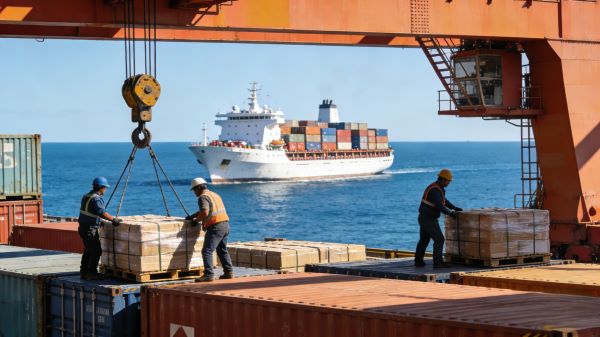
In July 2024, a large container vessel suffered unexpected shallow-water grounding during the approach phase of regional transshipment terminals, which caused complete propulsion system malfunction and suspended independent navigation capacity.
Local port authorities dispatched professional offshore salvage fleets and dedicated emergency response teams to refloat the stranded vessel, preventing secondary marine environmental pollution and regional navigational obstruction risks.
The large-scale emergency salvage operation incurred considerable non-recurring service fees. The local terminal issued substantial salvage bond guarantee requirements for all onboard cargo consignments. The vessel carrier submitted official General Average declaration documents immediately after incident confirmation.
How to calculate individual shipper salvage bond proportional liabilities?
Salvage bond proportional calculation follows standardized GA valuation logic, which matches individual cargo contributory value with total verified disaster salvage expenditures to confirm equitable liability shares.
The recommended approach is to adopt industry-recognized GA allocation formulas endorsed by professional maritime average adjusters to realize transparent, auditable and reasonable bond distribution results.
Verify total valid salvage bond pool:Confirm the total statutory bond amount issued by port authorities and exclude routine docking fees and daily handling charges from the allocation scope.
Assess individual cargo contributory value:Evaluate the market value of intact cargo based on official commercial transaction records and customs declaration certification documents.
Calculate proportional sharing coefficients:Divide individual cargo assessed value by the aggregate value of vessel hull, valid freight revenue and all onboard cargo to obtain accurate liability ratios.
Compute final shipper payable amount:Multiply the total valid salvage bond pool by individual proportional coefficients to confirm the guaranteed payment amount for each cargo owner.
What operational flaws increase GA bond settlement risks?
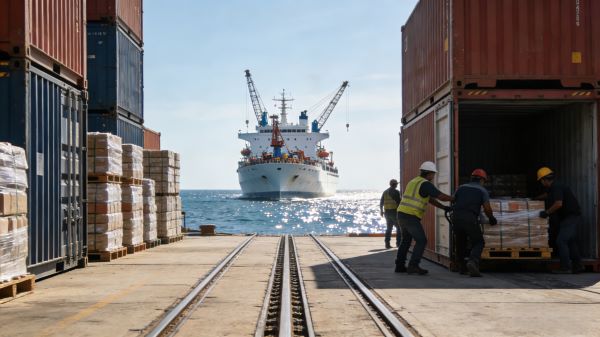
Multiple frequent operational flaws during GA bond settlement procedures may raise financial cost risks and cargo detention probabilities for global shippers and forwarding service providers.
Incomplete supporting document collation delays insurance reimbursement progress and extends cargo detention duration at terminal yards, resulting in accumulated additional operational expenditures.
Inaccurate cargo value declaration distorts proportional bond calculation benchmarks, which may trigger unreasonable cost overpayment or post-settlement audit disputes between cargo owners and carriers.
Failure to distinguish insured and uninsured bond items leads to inaccurate client cost budgeting and inconsistent financial expectation guidance in GA settlement services.
What optimized workflows streamline GA salvage bond settlement?
Targeted standardized operational workflows help forwarding practitioners optimize GA salvage bond settlement procedures and reduce controllable financial risks for cooperative cargo clients.
Forwarders should note that early-stage document preparation and proactive insurance business linkage effectively improve the overall efficiency of GA bond reimbursement and cargo release procedures.
Classify bond fee attributes in advance:Distinguish statutory salvage guarantee fees from regular port operational charges to avoid inappropriate cost classification and accounting errors.
Collate complete official supporting documents:Systematically collect port bond invoices, detailed salvage operation reports and formal GA declaration certificates to support subsequent insurance claim reviews.
Launch timely insurance verification communication:Engage with professional insurance adjusters in a timely manner to confirm specific coverage scopes and eligible reimbursement amounts for bond expenditures.
Apply flexible installment settlement solutions:Communicate and cooperate with port financial management departments to apply for installment payment schemes, relieving one-time capital pressure for medium and large cargo consignments.
What long-term methods stabilize GA bond risk management?
Sustained standardized risk management mechanisms help forwarding enterprises reduce GA bond settlement uncertainties and improve professional service capabilities amid volatile global shipping markets.
Maritime disaster incidents remain recurrent in current cross-border logistics environments, making standardized salvage bond processing capabilities a core component of reliable maritime freight services.
Embed GA bond clauses in service contracts:Clarify bond liability allocation rules and document notification obligations in advance to reduce post-incident communication discrepancies.
Establish internal GA settlement case archives:Archive typical salvage bond settlement cases and calculation experiences to form reusable internal operational standards.
Maintain stable third-party institutional cooperation:Establish long-term partnerships with professional average adjusters and insurance institutions to ensure accurate loss assessment and efficient settlement.
Track updated maritime industry rules:Continuously monitor revisions of York-Antwerp Rules and port GA management policies to maintain compliant daily operations.
As global maritime supply chains maintain fluctuating operational states and disaster-level maritime incidents occur intermittently, standardized salvage bond assessment and settlement methods deliver stable practical value for cross-border shipping practitioners. The systematic experience summarized from this General Average (GA) Contribution Case Study enables forwarders and shippers to effectively control emergency guarantee costs, standardize multi-party liability allocation and maintain stable cross-border cargo transportation operations.
Last
Offering transparent anti trade circumvention alternative logistics transit solutions protecting Solar Cell Panel direct export flows
Anti-Circumvention Logistics Solutions for Solar Panel Export provide transparent, regulatory-compliant alternative transit mechan
Next
Protecting shipper assets during a general ocean average declaration to calculate GA cargo contribution liabilities via an analytical case study
This practical General Average (GA) Contribution Case Study explores feasible cargo asset protection tactics and standardized liab
