Testing alternative inland routing as practical port congestion solutions during major coastal strikes

Freight Experience

25-May-2026

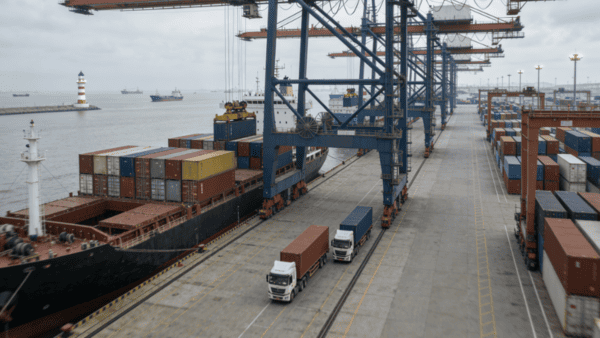
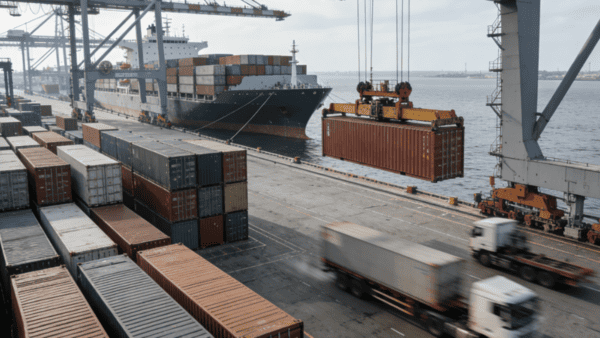
Port congestion solutions rely heavily on flexible inland intermodal routing strategies to mitigate supply chain disruptions triggered by large-scale coastal port industrial action and terminal operational halts. Coastal port labor strikes have evolved into a recurrent systemic risk in global liner shipping, frequently causing offshore vessel anchoring surpluses, full-container yard backlogs, and cross-border cargo delivery deferrals. According to UNCTAD 2025 Maritime Transport Review data, unplanned port labor disruptions extend container dwell time by an average of 37% and suppress terminal throughput capacity by approximately 29% at major coastal hub ports globally. For global freight forwarders, these abrupt operational disruptions create pressing execution challenges, making adaptive inland route diversion one of the most reliable and responsive port congestion solutions to sustain cargo fluidity amid crisis scenarios.


What triggers extreme port congestion during coastal port industrial strikes?


Strike-induced coastal port congestion refers to systemic cargo backlogs and terminal operational paralysis caused by suspended longshore labor, gantry crane operations, and gate-in/gate-out logistics at major seaport facilities. It differs fundamentally from cyclical congestion driven by peak shipping seasons or vessel overtonnaging, as labor-led disruptions feature abrupt onset, indeterminate duration, and full-terminal operational standstill, which exacerbates supply chain financial and operational losses substantially.


What are the core inducements of coastal port labor strikes?


Most coastal port industrial action originates from collective labor disputes involving working hour regulations, remuneration adjustments, and operational benefit distribution mechanisms, which directly suspend core terminal handling functions. When longshoremen, terminal stevedores, and gate administrative personnel cease operations, container stowage, discharge, customs clearance processing, and drayage dispatching services experience full-scale suspension. Inbound ocean-going vessels are forced to maintain offshore anchorage waiting for vacant berths, while overland inbound cargo accumulates at port access gates, forming a dual backlog of maritime and inland freight assets.


What operational oversight worsens strike-related congestion?


A common mistake is that numerous forwarders prioritize real-time vessel schedule monitoring during strike events while neglecting cascading inland logistics bottlenecks and cargo accumulation pressure. This delayed risk judgment postpones route reconfiguration decisions, allowing congested coastal terminals to receive continuous redundant cargo inflows and aggravating overall delivery delays. According to UNCTAD 2025 statistical analysis, labor-induced port disruptions impact 12% more container throughput volume than seasonal congestion due to complete manual terminal operation suspension and zero contingency handling capacity.


Why do alternative inland routing strategies mitigate strike-related port congestion effectively?


Alternative inland routing is a structured intermodal freight strategy that diverts seaborne container cargo to inland dry ports and cross-border overland corridors to bypass operationally paralyzed coastal hub ports during industrial strike events. This approach decouples container transportation workflows from disrupted coastal terminal systems and sustains basic cross-border supply chain continuity.


What core operational independence does inland routing possess?


The primary competitive advantage of inland routing lies in its isolation from coastal port labor union disputes and terminal workforce fluctuations. Inland freight hubs, rail intermodal terminals, and cross-border land ports operate under independent labor management systems, remaining unaffected by coastal industrial action and ensuring stable cargo handling and transit reliability. The recommended approach is for forwarders to pre-map tiered inland alternative corridors for key trade lanes rather than implementing passive route adjustments after strike escalation.


What infrastructure foundation supports large-scale inland cargo diversion?


Global intermodal corridor expansion in 2024–2025 has established robust infrastructure support for large-scale inland cargo rerouting. According to official 2025 global logistics corridor statistics, the New International Land-Sea Trade Corridor connects 555 maritime and inland ports across 127 economies, delivering diversified transit passage options for cross-border containerized freight. This comprehensive network coverage enables forwarders to execute agile route switching and evade congested coastal terminals during labor disruption crises.


What strategic risk value does inland routing deliver for forwarders?


Forwarders should note that inland routing serves dual functions of congestion mitigation and supply chain risk diversification. Over-reliance on singular coastal hub port networks creates single-point failure vulnerabilities, while diversified inland intermodal routes strengthen the overall anti-disruption resilience of global freight forwarding networks against unplanned terminal shutdowns.


What core operational and financial benefits do inland alternative routes offer forwarders?


Inland alternative routing generates multi-dimensional operational and economic advantages for global forwarders confronting coastal port strike congestion. It resolves critical industry pain points including container detention, schedule slippage, and contractual order default risks stemming from paralyzed coastal terminal operations.


Sustained cargo transit integrity: Inland rail and road intermodal terminals maintain continuous operational throughput during coastal port industrial strikes. Independent of coastal longshore labor resources, these inland facilities execute standardized container loading, discharge, and transshipment procedures on schedule. According to 2025 Freightos Baltic Index (FBX) maritime logistics analytics, cargo diverted to qualified inland intermodal routes during port labor disruptions cuts average transit delay durations by 42% compared with cargo stranded at congested coastal terminals.


Reduced demurrage and detention expenditures: Extended vessel anchorage and container overstocking at striking coastal ports generate substantial demurrage and detention charges for shippers and forwarders. Timely diversion to inland alternative routes eliminates incremental fee accumulation caused by prolonged cargo immobilization. Verified 2025 global intermodal operational data indicates that proactive inland route reconfiguration reduces unplanned congestion-related logistics expenditures by 35% to 50% for cross-border container shipments.


Stabilized client delivery compliance: Global manufacturing and retail cargo principals enforce rigid contractual delivery timelines for cross-border shipments. Strike-induced port congestion frequently triggers schedule breaches and commercial disputes. Inland intermodal routing preserves fundamental delivery schedule stability, enabling forwarders to sustain long-term contractual partnerships and mitigate order default liabilities.


Agile emergency operational adaptability: Inland intermodal corridors feature lower single-batch cargo volume thresholds and dynamic scheduling flexibility relative to large-scale coastal hub terminals. Forwarders can recalibrate individual shipment transportation schemes dynamically based on strike duration and congestion severity, realizing granular emergency logistics governance.


How to execute standardized inland routing diversion during coastal port strikes?


Structured implementation of inland route diversion requires standardized operational workflows to facilitate seamless cargo transshipment and prevent secondary inland logistics bottlenecks. Systematic route planning and cross-stakeholder coordination are critical to maximizing the practical value of these port congestion solutions.


Execute real-time strike and congestion severity assessment: Forwarders shall collect official operational advisories from affected coastal ports, covering strike commencement timelines, projected duration, suspended service scopes, and accumulated container backlog volumes. Cross-referencing UNCTAD 2025 real-time port performance metrics, operational teams quantify congestion severity and validate the necessity of large-scale inland route diversion.


Screen qualified inland intermodal transit corridors: Align route selection with cargo origin, destination, container specification, and transit urgency to identify mature rail-sea and road-sea intermodal corridors. Prioritize routes with stable throughput capacity, standardized customs clearance mechanisms, and field-verified transit efficiency, including the China-ASEAN Land-Sea Corridor and Eurasian Transcontinental Rail Freight Routes.


Pre-coordinate cargo transshipment and terminal resource reservation: Conduct advance communication with inland terminal operators, intermodal carriers, and customs authorities to reserve handling quotas and complete cargo declaration pre-registration. This proactive coordination prevents secondary congestion at inland hubs caused by centralized cargo diversion and ensures seamless modal transfer between maritime and overland logistics links.


Implement tiered cargo batch scheduling protocols: Classify inbound shipments by delivery priority, time sensitivity, and container type. Deploy urgent time-critical cargoes to inland diversion routes first, while adjusting transit cycles for bulk conventional cargoes rationally to balance inland terminal operational load and avoid capacity saturation.


Deploy full lifecycle cargo transit tracking: Establish end-to-end monitoring mechanisms for diverted cargoes, covering inland carriage, terminal handling, customs clearance, and final mile delivery status. Adjust routing schemes dynamically based on real-time highway and rail operational conditions to eliminate potential transit disruptions.


What critical operational pitfalls should forwarders avoid in inland route diversion?


While inland routing delivers viable port congestion solutions during coastal industrial strikes, unregulated operational decisions may trigger secondary logistics risks and incremental cost burdens. Forwarders must evade prevalent operational errors to sustain consistent diversion efficacy.


Unconditional large-scale diversion without capacity due diligence: A common mistake is executing full-scale cargo diversion immediately after strike confirmation without auditing inland terminal throughput limits and operational saturation thresholds. Massive centralized cargo inflows may induce temporary inland hub congestion, offsetting diversion benefits and generating new schedule delays.


Oversight of intermodal cost differential governance: Inland intermodal transportation carries distinct unit cost structures compared with conventional coastal liner shipping services. Forwarders should note that unevaluated route switching may elevate overall logistics costs. The recommended approach is conducting pre-diversion cost-benefit benchmarking to select diversion schemes with balanced operational efficiency and economic viability.


Neglect of cross-terminal customs regulatory discrepancies: Inland dry ports and coastal seaports maintain differentiated customs clearance protocols and documentary submission requirements in multiple trade jurisdictions. Failure to adapt declaration documentation to inland terminal regulatory rules will result in clearance hold-ups and container detention, undermining overall transit efficiency.


Absence of multi-tiered backup routing contingencies: Individual inland transit corridors may encounter temporary traffic control restrictions or capacity recalibrations. Over-reliance on a single inland alternative route eliminates emergency response buffers during route anomalies, reducing congestion mitigation stability.


How to build long-term inland routing resilience against recurring strike risks?


Long-term optimization of inland intermodal routing networks enables forwarders to establish proactive port congestion risk prevention systems, lowering emergency response overhead during coastal strike events. Preemptive network layout delivers superior stability compared with reactive route adjustment strategies.


How can route database construction enhance emergency response efficiency?


Forwarders should develop a centralized alternative route database covering mainstream global trade lanes. The repository systematically archives inland terminal throughput capacity, standard transit lead times, modal freight rates, customs clearance efficiency, and applicable cargo categories for each corridor, supporting rapid route matching during port emergency scenarios. According to 2025 ITC Trade Map industry benchmarks, logistics service providers with standardized alternative route databases reduce port disruption emergency response latency by over 52%.


How do scenario simulations strengthen operational proficiency?


Quarterly port strike and congestion scenario simulation drills constitute an effective optimization measure. By conducting regular diversion workflow rehearsals, forwarder teams standardize operational protocols, clarify role-based responsibilities, and enhance cross-departmental coordination proficiency. Scheduled simulation training ensures structured, efficient execution during real-world port congestion emergencies.


Why are long-term carrier partnerships critical for route stability?


Sustained strategic cooperation with inland terminal operators and intermodal carriers is essential for emergency capacity guarantee. Stable partnership frameworks entitle forwarders to priority handling access and capacity reservation privileges during peak diversion cycles, preventing resource shortages amid market-wide congestion. With the continuous maturation of global intermodal logistics ecosystems, systematic inland alternative route layout will remain a core operational competency for international freight forwarding enterprises.


In summary, iterative testing and systematic optimization of alternative inland routing continue to stand as one of the most pragmatic and cost-effective port congestion solutions for global forwarders to offset operational disruptions arising from large-scale coastal port strikes. By standardizing diversion workflows, mitigating common operational pitfalls, and completing long-term resilient route network deployment, forwarders can effectively hedge port congestion risks, stabilize cross-border supply chain operations, and deliver consistent, reliable freight services for global trade stakeholders.

Last

Who pays when sea freight delicate cargo damage happens inside a poorly lashed flat rack

Sea freight cargo damage handling for open flat rack shipments is a core professional challenge for global freight forwarders, as

Next

What years of fcl container shipping experience taught us about managing carrier allocation

Years of FCL Shipping Experience empowers professional freight forwarders to develop data-backed carrier allocation strategies tha